

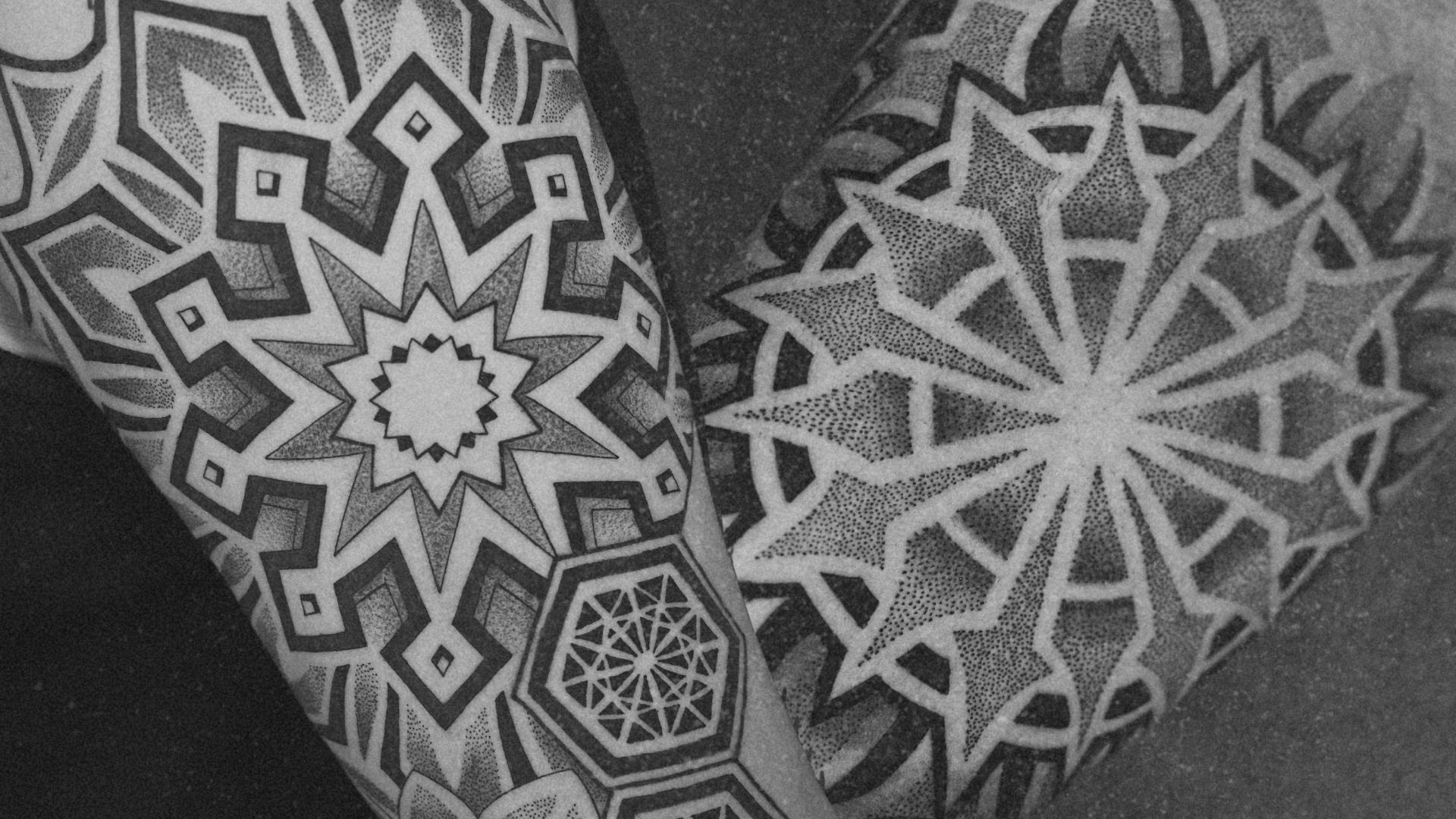
How Geometric Tattoos Are Planned for Perfect Symmetry
At first glance, a geometric tattoo may appear beautifully simple. Add a few circles, triangles, lines and patterns, and there you go. But there’s a lot of planning that goes into that clean look. A single misplaced line will make a carefully worked-out pattern look curiously uneven. That’s why tattoo artists take quite a bit of time for measurements, placement and proportions before the needle ever touches the skin.
It Begins With the Proper Geometry
The design itself begins the planning process. Geometric tattoo designs are often made up of shapes such as circles, triangles, squares, hexagons and repeating patterns. Each shape needs to be related to the others properly.
Artists can employ grids, reference points and measured spacing to keep it all in check. The centre line is especially important for a symmetrical tattoo. Once the centre is created, the design can be built out on both sides with matching elements. It sounds a bit like school maths, but there is thankfully no exam at the end.
Tattoo Placement Measurement
Skin is not a smooth sheet of paper. This is a big deal in terms of planning geometric tattoos.
The artist checks the natural shape of the body and studies how the skin moves when the person is standing, sitting or changing position. Each part of the body has its own curves, and a design on the arm, chest, back or thigh will respond differently.
Even if a tattoo seems perfectly balanced on paper, it may need some slight tweaks when applied to skin. Having a tattoo that looks nice on paper isn’t as important as having one that fits well and is full.
Balanced Stencil Creation
The stencil is an important part of the process once the design has been finalised. The artist carefully places it to coincide with the body’s natural landmarks.
If a geometric tattoo is large, artists may use multiple reference points to keep things aligned. They check distances between important elements and make sure repeated shapes have consistent spacing.
This stage allows the client to see how the tattoo will sit on the body. It is a lot easier to make small changes before you start tattooing than to try to fix an uneven design afterward.
Why Does Movement of the Skin Matter?
And this is where geometric tattooing becomes really interesting. Skin stretches, folds and shifts. Muscles can also change the appearance of a design as the body moves.
This is considered by an experienced tattoo artist when setting the pattern. Lines can be made to follow body contours, and circles and symmetrical elements need to be carefully placed so they appear symmetrical at normal viewing angles. The goal is a tattoo that stays well proportioned, even with natural movement.
Accuracy While Tattooing
The foundation is planning, and execution takes a lot of patience. The artists tend to work systematically, checking lines, angles and spaces during the tattooing session.
Even small details can influence the final appearance of intricate designs. The pattern retains its visual structure with uniform line weight and clean intersections.
Choose Experience for Complex Geometric Work
Perfect symmetry takes planning, precise placement and an artist who understands both geometry and the human body. Considering getting one of your own? Sam Tattoo India is here to take your geometric tattoo idea and turn it into a well-thought-out design that will match your body and your style.