

Sanskrit Typography: Best Fonts for Shiva Mantra Tattoos
When someone commits to getting a shiva mantra tattoo, they’re making a choice that transcends aesthetics. They’re embedding spiritual intention into their skin. Yet many overlook a critical decision that can make or break the final result: typography. The font itself carries as much weight as the words it displays.
Sanskrit is inherently complex. Its script flows with curves that demand precision, ligatures that require understanding, and proportions that don’t translate well to random digital fonts. A shiva mantra tattoo demands respect for these nuances. The difference between a rushed, distorted rendering and a properly
Devanagari: The Traditional Foundation
Devanagari remains the most authentic choice for mantras. It’s the script Lord Shiva himself appears alongside in ancient texts. When executed correctly, Devanagari carries a visual weight that modern minimalist fonts simply cannot replicate. The horizontal line (shirorekha) that sits above each character is structural and symbolic, holding the mantra together visually just as the meaning holds it spiritually.
However, not every Devanagari font works for tattooing. Screen fonts designed for digital readability often have thin strokes that disappear under skin. Professional studios source fonts designed specifically for permanence, with balanced stroke weights that age gracefully on the body.
Modified Calligraphic Approaches
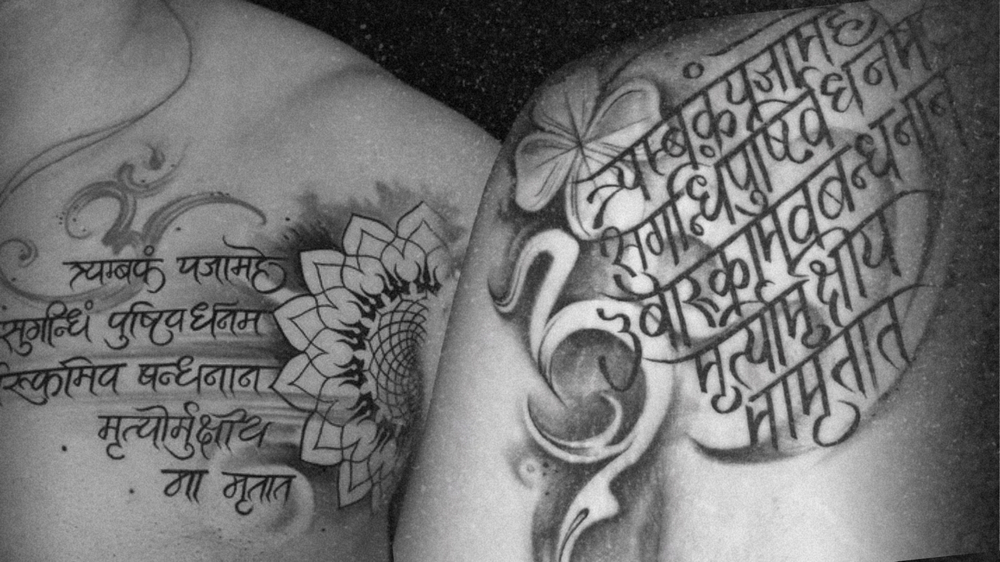
Some practitioners prefer a middle ground. A shiva mantra tattoo rendered in semi-calligraphic Devanagari merges traditional authenticity with contemporary aesthetic appeal. These custom typography pieces require artists who understand both Sanskrit structure and tattoo mechanics. The challenge lies in preserving readability while adding visual personality.
This approach works particularly well for smaller placements. A wrist-sized mantra needs tighter letterforms, while back or chest placements allow for more elaborate flourishes and breathing room between characters.
The Placement and Size Factor
Typography choices shift dramatically based on where the tattoo sits on the body. A shoulder blade offers canvas for intricate work, allowing fonts with finer details and complex ligatures. A forearm demands clarity, where ornamental styles might become muddy or illegible over years.
Professional artists who specialize in Sanskrit typography understand these mechanical realities. They don’t just select a font; they modify it, adjust spacing (called kerning in typography), and sometimes redraw characters entirely to ensure the shiva mantra tattoo translates perfectly onto skin without distortion.
The Hand-Drawn Element
The most compelling shiva mantra tattoos often incorporate hand-drawn custom lettering. Rather than pulling from existing fonts, experienced artists sketch original interpretations that honor traditional proportions while bringing personal artistry to each piece. This removes the one-size-fits-all limitation of digital typefaces.
This process demands consultation. The artist asks about the mantra’s personal significance, the wearer’s spiritual practice, and their vision for how the piece should feel. These conversations shape everything from letter weight to spacing to decorative elements surrounding the text.
Final Consideration
Choosing a shiva mantra tattoo isn’t just about finding visually appealing letters. It’s about understanding that Sanskrit typography carries responsibility. The font you select should honor the mantra’s meaning while serving the permanence of tattooing. Studios that take this seriously invest time in typography consultation before any needle touches skin, ensuring your spiritual commitment looks as meaningful as it feels.